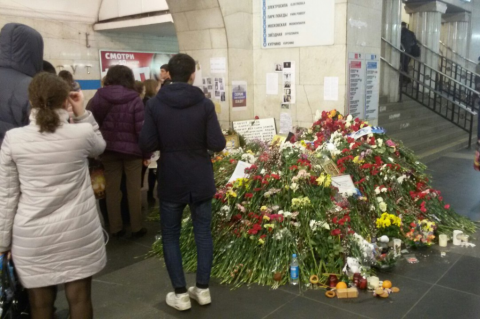
In April 2017, a bombing took place in the Saint Petersburg metro. The explosion killed 16 people and injured 103.
According to the pre-trial investigation, the suicide attack was carried out by Akbarzhon Dzhalilov and organized by the “Katibat al-Tawhid wal-Jihad” jihadist group consisting of Uzbek fighters, active in Syria, previously with support from Al-Qaeda. The group however, did not claim responsibility for the attack.
Russian security services arrested 11 suspects. They were sentenced last December. All of them denied the charges. The Memorial human rights organization sees the trial as questionable. Of those convicted, the most likely to have been involved in the attack was Abror Azimov who got a life sentence; he transferred money to Dzhalilov several times. Abror’s brother, Akram, was sentenced to 28 years in prison. He brought money to his brother from Turkey but there is no evidence that Akram knew what the money was intended for.
The other sentences rest on even weaker grounds. Shokhista Karimova, 48 years old, was sentenced to 20 years in prison for having activated the SIM card Abror used for the money transfers on her own cellphone. She had done this on Abror's request. 41 year old Sodik Ortikov received a 22-year term for making a test call to Karimova’s phone in this activation process.
Seven migrant workers who had stayed in an apartment on Tovarishchesky Prospect in Saint Petersburg were sentenced to prison terms ranging from 19 to 28 years. Only one of them knew Dzhalilov. Some of the residents of this apartment were not there when “authorities” showed up, they were not even questioned. Simply being in the wrong place at the wrong time will made the difference between 19 to 28 years in prison, or freedom.
According to the pre-trial investigation, weapons and explosives were found in the homes of almost all of the accused. Human rights activists say that these findings seem to have been staged. Three of those arrested were tortured in a secret prison run by the security service in the Moscow region.
All of the accused are of Central Asian origin, many of them from the Kyrgyzstani Uzbek minority, from the city of Osh. In 2010, between 400 and 2000 members of this ethnic group were killed in attacks by gangs belonging to the Kyrgyz majority ethnic group. Thus, the accused belong to the most marginalized ethnic group in the former Soviet Union. Due to the nature of the charges, as well as the completely marginal social position of those accused there is no chance that visible solidarity actions will be organized or even considered.
Armed attacks as well as hate speech are far more common in Russia than in any EU country. They have been addressed systematically during the last 20 years. In some cases, problems have been solved; however, there is enough “field data” in Russia for anyone interested in what kind of mistakes and abuses can be made when anti-terrorism and anti-hate laws are enacted and applied.
Antti Rautiainen
Podcast version: https://soundcloud.com/arautiainen/in-russia-just-fitting-the-terrorist-profile-will-put-you-in-prison